Exciting Events and Activities in St. Louis
Design-Forward Home Staging Trends in Clayton & University City
Exciting Events and Activities in St. Louis
Wondering how to make a Clayton or University City home feel fresh, polished, and market-ready without stripping away the character that makes it special? That balance matters here, because local housing ranges from early 20th-century revival styles to postwar homes with very different proportions and details. If you are preparing to sell, the goal is not to erase personality with trends. It is to present your home in a way that feels current, believable, and true to its architecture. Let’s dive in.
In Clayton, the city notes that its landscape includes a downtown business district alongside quiet residential neighborhoods, with 81% of its land in residential or park use. University City describes itself as a place shaped by City Beautiful planning, with architecturally distinct housing and a broad range of home styles, from older south-side homes near Delmar to postwar development in the north side. That variety means staging should respond to the home itself, not follow a one-size-fits-all formula.
For sellers in these areas, the smartest approach is usually to update the feeling of the home without covering up period character. In neighborhoods with Tudor Revival, Georgian, Colonial Revival, Craftsman, Spanish, French, and other historic influences, buyers often respond best when original details stay visible and the furnishings feel simple, clean, and current. You can explore Clayton’s local context on the City of Clayton website and University City’s preservation resources through its historic districts and landmarks map.
In both Clayton and University City, many homes already have strong visual assets. Think original millwork, fireplaces, built-ins, stair rails, leaded windows, and room-to-room symmetry. Good staging should make those features easier to notice.
That usually means removing visual clutter, simplifying furniture layouts, and avoiding decor that competes with the architecture. If your home has historic trim or formal proportions, skip heavy theme decor and let a few well-scaled pieces do the work.
If you are staging a period home, try to preserve sightlines to the details buyers cannot easily recreate. A carved mantel, classic staircase, coved ceiling, or built-in shelving can become part of the visual story of the house.
This matters in local districts such as Clayton’s historic neighborhoods and University City’s designated historic areas, where the built environment itself is part of what attracts buyers. According to Clayton’s architectural and historic district materials, areas like Claverach Park and Wydown-Forsyth include many early 20th-century revival homes with carefully planned streetscapes and setbacks. That context supports a staging style that feels edited and respectful rather than overly trendy.
A design-forward room does not need much. In fact, many Clayton and University City homes benefit from a restrained mix of contemporary furniture, soft textures, and neutral color.
The key is contrast. Pair traditional architecture with simple upholstery, clean-lined lighting, and understated accessories so the home feels current but still rooted in its original design.
If you are deciding where to spend time and budget, focus on the rooms that shape a buyer’s first impression. According to the National Association of Realtors 2025 staging report, staging mattered most in the living room, primary bedroom, and kitchen. The same report found that 83% of buyers’ agents said staging made it easier for buyers to visualize a property as a future home, while 49% of sellers’ agents said staging reduced time on market.
That does not mean every room needs a full makeover. Often, the best return comes from a polished front approach, strong public rooms, and a calm primary suite.
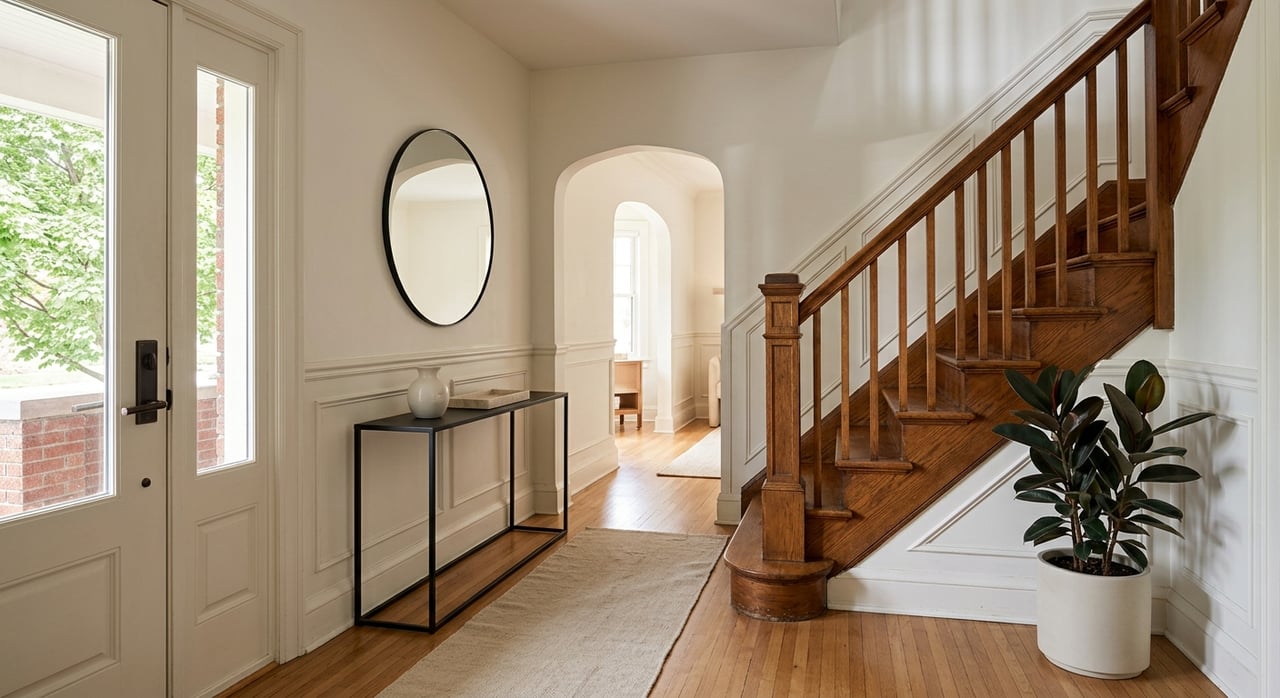
Your entry should feel open, quiet, and intentional. In older homes, this is often where buyers first notice stair details, archways, trim, or flooring patterns.
Remove extra chairs, bulky consoles, and small decorative clutter. A simple runner, one piece of art, and a clean landing area are often enough.
The living room is the highest-priority room to stage, according to NAR. Your furniture plan should create one clear focal point, whether that is a fireplace, a large window, or built-ins.
Leave enough negative space so buyers can understand scale. In homes with formal architecture, that space helps the room feel elegant instead of crowded.
Kitchens do not need to look sterile, but they do need to look spacious. Clear counters, remove appliance clutter, and make prep space easy to read.
If your kitchen has older cabinetry or original details, good styling can help buyers focus on light, function, and flow. A bowl of fruit, a wooden board, and neatly edited shelves usually work better than layered decor.
In Clayton especially, many homes have formal dining rooms that still matter to buyers. Even if you use the room casually, stage it as an entertaining space.
A centered table, balanced lighting, and minimal tabletop styling can help the room feel purposeful. This is especially effective in homes with traditional millwork or strong room definition.
The primary bedroom should feel calm and lightly furnished. NAR found it ranked just behind the living room in staging importance, so this is not the room to overfill.
Use warm bedding, small nightstands, and simple lighting. Keep the palette soft so the room feels restful and spacious.
Bathrooms show best when counters are mostly clear and the overall feel is fresh and hotel-like. White towels, a clean mirror, and edited surfaces can go a long way.
Secondary bedrooms can stay more flexible and spare. Since these rooms ranked lower in staging importance, it is usually enough to make them feel clean, functional, and easy to imagine in multiple uses.
Current staging trends are moving toward comfort, warmth, and texture. In NAR’s recent design coverage, warm beiges, earthy browns, natural materials, and tactile finishes stood out as key direction. NAR also reported that soft or warm whites were top choices for living areas, while warm neutrals led in bedrooms. You can see that trend in NAR’s coverage of cozier listing design trends.
For Clayton and University City homes, a restrained palette usually works best. Warm white, soft greige, taupe, muted sage, and dusty blue tend to complement older trim, brick, stone, and traditional proportions better than stark white or sharp black-and-white contrast.
Texture matters, especially in online marketing. Linen, wool, jute, wood, matte ceramics, and aged brass can add warmth without distracting from the home itself.
These materials also help formal rooms feel more livable. That balance is important because buyers often expect homes to look polished in person and in photos, but they can feel let down when a space looks overproduced or unrealistic.
Before a buyer sees your living room, they see your front walk, porch, and entry. NAR found that curb appeal improvements were among the most common seller recommendations, which makes sense in neighborhoods with mature trees, established sidewalks, and strong streetscapes.
You do not need elaborate landscaping to make an impact. A clean path, trimmed plantings, a tidy porch, and a well-framed front door often do more than big decorative gestures.
A few practical updates can make the home feel cared for right away:
If your home is in a historic district, staging and light cosmetic prep should support the home without creating approval issues. University City’s Historic Preservation Commission reviews proposed changes within historic districts, and Clayton’s Architectural Review Board and zoning framework emphasize design quality and preservation of distinctive historic characteristics.
That is why pre-listing work often works best when it is light, reversible, and focused on presentation. Cleaning, decluttering, painting where appropriate, minor repairs, and permitted exterior touch-ups can all improve marketability without complicating the process.
Design-forward staging is not just about pillows and artwork. It works best as part of a larger plan. According to the NAR report, the most common seller recommendations were decluttering, whole-home cleaning, and curb appeal improvements.
A strong pre-listing sequence often looks like this:
This kind of sequence can help your home feel cohesive on launch day, especially when marketing is visual and buyers are making fast judgments online.
Many sellers assume design-forward means expensive or elaborate. It often means the opposite. NAR reported a median cost of $1,500 for using a staging service and $500 when the seller’s agent handled staging themselves, but the bigger lesson is that not every room needs equal investment.
In a character-rich Clayton or University City home, less is often more. If the architecture is strong, your job is to clear the view, soften the palette, and create a believable sense of how the home lives today.
If you are preparing to sell in University City, Clayton, or another design-sensitive St. Louis neighborhood, a thoughtful plan can make a real difference in how buyers see your home from the first photo to the final showing. For guidance on presentation, preparation, and a project-managed listing experience, connect with Svoboda Shell.