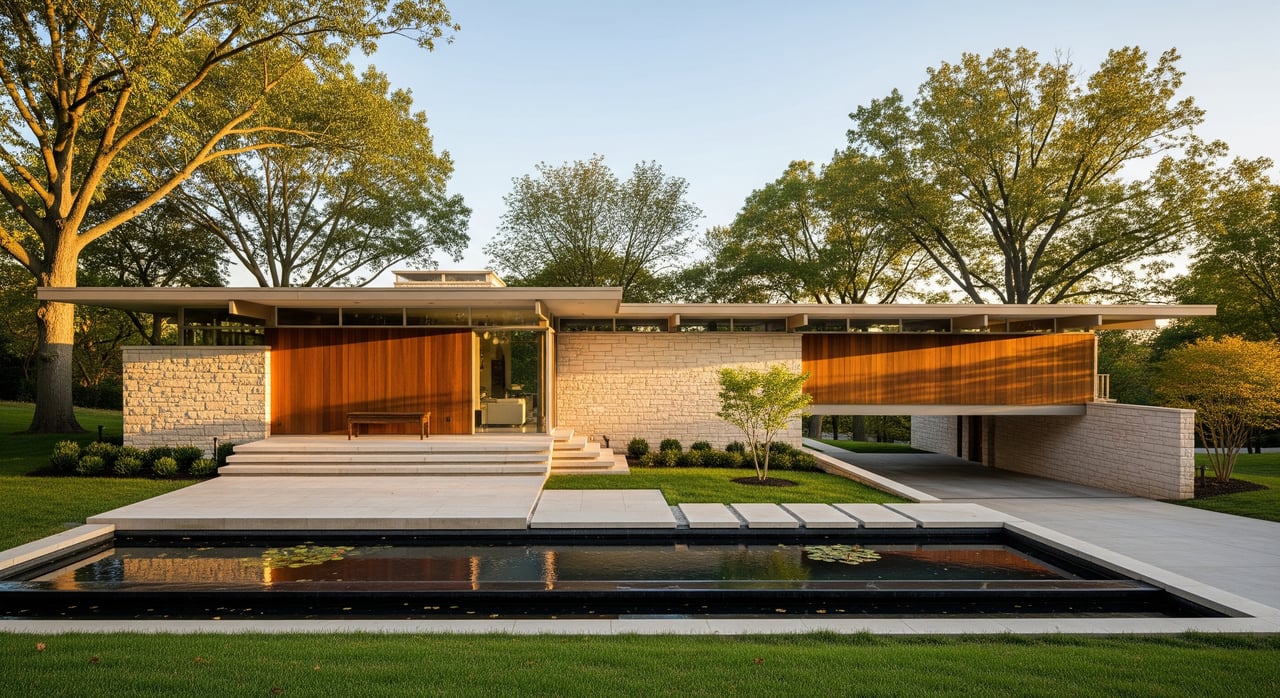
If you love clean lines, warm wood, and walls of glass, you are in good company. Sunset Hills and Crestwood quietly hold some of South County’s best mid-century modern opportunities, from classic ranches with modern details to rarer post-and-beam gems. Finding the right one can feel tricky, especially when listings use the term loosely. In this guide, you’ll see where to look, what features to expect, how to evaluate condition, and how to move fast when the right home appears. Let’s dive in.
What “mid-century modern” means here
In Sunset Hills and Crestwood, mid-century modern often shows up as single-story ranches and split-levels built during the postwar suburban boom. You will find modest homes with mid-century details alongside a smaller number of architect-designed or post-and-beam houses. Because many properties were updated over time, intact original features are less common and more sought after.
Exterior signatures
- Low, horizontal rooflines with deep eaves.
- Simple, asymmetrical facades and geometric forms.
- Large windows and sliding doors that connect to the yard.
- Patios and terraces that extend living space outdoors.
- Brick, stone veneer, vertical wood siding, and sometimes exposed block.
- Earlier ranches may have carports instead of full garages.
Interiors and layouts
- Open or semi-open plans where living, dining, and kitchen flow together.
- Built-in cabinetry and shelving that anchor living spaces.
- Exposed beams or visible structure in post-and-beam designs.
- Natural light is a priority, often with picture windows or clerestories.
- Original kitchens are modest by today’s standards and are often remodeled.
Systems to understand
- Low-slope or flat roofs and extensive glazing need diligent maintenance.
- Original single-pane windows are common and affect energy performance.
- Older insulation, electrical service, and ductwork may require upgrades.
- Homes of this era can include materials that need testing and mitigation, such as asbestos or lead paint.
Where to find MCM in Sunset Hills and Crestwood
The best hunting grounds are subdivisions built in the 1950s and 1960s. You will see clusters of ranch and split-level homes, some with clear mid-century detailing. Edges of the city and corridors that were heavily subdivided during that time often reveal strong examples.
Smart MLS and records search
- Filter by year built. Start with 1948 to 1975, then refine by design features.
- Use keywords. Try “mid-century,” “midcentury,” “mid century,” “post and beam,” “ranch,” “split level,” “clerestory,” “glass wall,” “carport,” “built-ins,” and “atrium.”
- Map the footprint. Long, low rectangles and rear-oriented glazing can signal MCM.
- Check public records. St. Louis County Assessor data and historic aerials confirm build dates, additions, and lot context.
Drive-by scouting
- Focus on streets where most homes date to the 1950s–60s.
- Watch for low rooflines, window bands, and carports.
- Look for lots that orient living spaces toward private backyards.
Local resources
- St. Louis County Assessor and property map tools for year built and permits.
- Landmarks Association of St. Louis and Missouri Preservation for context and guidance.
- Neighborhood groups and MCM enthusiast communities that share listings and restorations.
Market and availability
Inventory of well-preserved mid-century homes is limited. Many houses marketed as “mid-century” are standard ranches or split-levels with a few modern touches. True architect-designed or post-and-beam homes exist but are rarer. Well-kept examples tend to draw attention from buyers across the region, so they can move quickly.
Pricing and renovation tradeoffs
Restoring or sensitively updating an MCM home can cost more per feature than a conventional remodel. Custom glazing, thin window sightlines, and period-accurate cabinetry take specialized trades. Common cost drivers include large-pane window replacements, roofline repairs, structural work around additions, improved insulation without losing interior finishes, and custom millwork to recreate built-ins. Energy upgrades are often necessary and should balance performance with preserving the look and proportions of the home.
Timing and strategy
Decide early whether you prefer an authentic restoration or an adapted modernization that blends character with contemporary systems. This choice shapes your property search and helps you evaluate listings quickly. Be prepared to act fast when a well-preserved example appears.
What to evaluate before you tour
Use this checklist to focus your first look and your questions for the listing agent.
Site and orientation
- How does the house engage the lot? Look for patios, courtyards, and rear-facing glass.
- Check grading and drainage, especially around low roofs and slabs.
Roof and exterior envelope
- Identify roof type and slope, and ask the age and leak history.
- Inspect large glazing assemblies and sliders for seal failure or fogging.
- Review masonry, siding, and trim for deferred maintenance.
Structural and mechanicals
- Look for signs of foundation movement and ask about any prior repairs.
- Verify HVAC age and ductwork layout to ensure even distribution.
- Confirm electrical service capacity and panel updates.
- Ask about insulation in walls and attic spaces.
Interior fabric and layout
Note original built-ins, doors, and trim. Are they intact or altered?
Clarify which walls are structural before planning changes.
Peek under carpets or inside closets to identify original flooring.
Hazardous materials and finishes
- Plan for testing if renovation is likely. Materials of concern can include some floor tiles, roofing products, and lead paint.
Alterations and additions
- Do additions maintain the original rooflines and daylighting?
- Confirm permit history for structural work and mechanical changes.
Preservation and zoning
- Most suburban MCM homes are not in formal historic districts, but verify any neighborhood covenants.
- Check setback and lot-coverage rules if you plan to expand.
Key questions to ask
- Ages of roof, windows, HVAC, water heater, and chimney service.
- Any history of water intrusion or foundation work.
- Whether past remodels were permitted and inspected.
- Known environmental hazards and any testing records.
- Typical utility costs and insulation improvements.
Renovating while keeping character
There is more than one right approach, and your goals drive the plan.
Two renovation philosophies
- Preservation and restoration. Maintain original materials, repair rather than replace, and match details like window proportions and cabinetry.
- Adaptive modernization. Keep the spatial qualities and key details while upgrading kitchens, baths, and systems for daily comfort and resale.
Choose the right specialists
- Seek contractors familiar with mid-century details, especially large-format glazing, minimal trim, and built-ins.
- HVAC retrofits should preserve sightlines and soffits.
- Finish carpenters who can replicate period joinery make a difference.
Energy and comfort upgrades
- Insulation, sealed ductwork, and efficient heating/cooling offer strong returns.
- Window choices should balance performance with sightlines and frame profiles.
Prioritize for value
- Address roof and water management first.
- Then resolve structural items.
- Upgrade electrical and HVAC next.
- Finish with kitchens, baths, and cosmetics once the envelope and systems are sound.
How we help you buy well
You deserve an advisor who understands the architecture and the market. As a design-aware, boutique team, we help you:
- Identify build-year clusters and likely pockets within Sunset Hills and Crestwood.
- Set targeted MLS alerts with the right keywords and visual filters.
- Evaluate listings for authentic features and potential red flags.
- Coordinate inspections and specialty consults for roofs, glazing, HVAC, and environmental testing.
- Model renovation scenarios so you can compare restoration versus modernization paths.
- Negotiate terms that protect your budget and original character elements.
If you are also planning to sell, we can help you prepare and position your home for design-minded buyers. Our project-managed approach and coordinated vendor network make period-sensitive updates more efficient and appealing.
Ready to find the right mid-century home in Sunset Hills or Crestwood? Let’s talk about your goals, timing, and budget. Connect with the Svoboda/Shell Group to get started.
FAQs
What defines a mid-century modern home in Sunset Hills and Crestwood?
- Homes built during the postwar decades with low rooflines, large windows, simple forms, and an emphasis on indoor–outdoor living, often as ranches or split-levels.
How rare are true post-and-beam or atrium homes locally?
- They exist but are less common than ranches and split-levels, so expect fewer options and faster competition when they hit the market.
What MLS filters help me find authentic MCM listings?
- Search by year built from roughly 1948 to 1975 and include keywords like “mid-century,” “post and beam,” “clerestory,” “glass wall,” “carport,” and “built-ins.”
Are flat or low-slope roofs a dealbreaker?
- Not necessarily, but they require careful maintenance and evaluation for water management, roof age, and prior leak history.
What upgrades deliver comfort without losing character?
- Insulation, sealed ducts, efficient HVAC, and window strategies that preserve sightlines while improving performance provide strong results.
How do I check if a home’s original features are intact?
- Look for built-ins, period doors and trim, original window configurations, and unaltered rooflines, and review photos and permits to see what has changed.
Are there historic restrictions in these suburbs?
- Most mid-century pockets here are not in formal historic districts, but you should verify any neighborhood covenants and local zoning before planning changes.