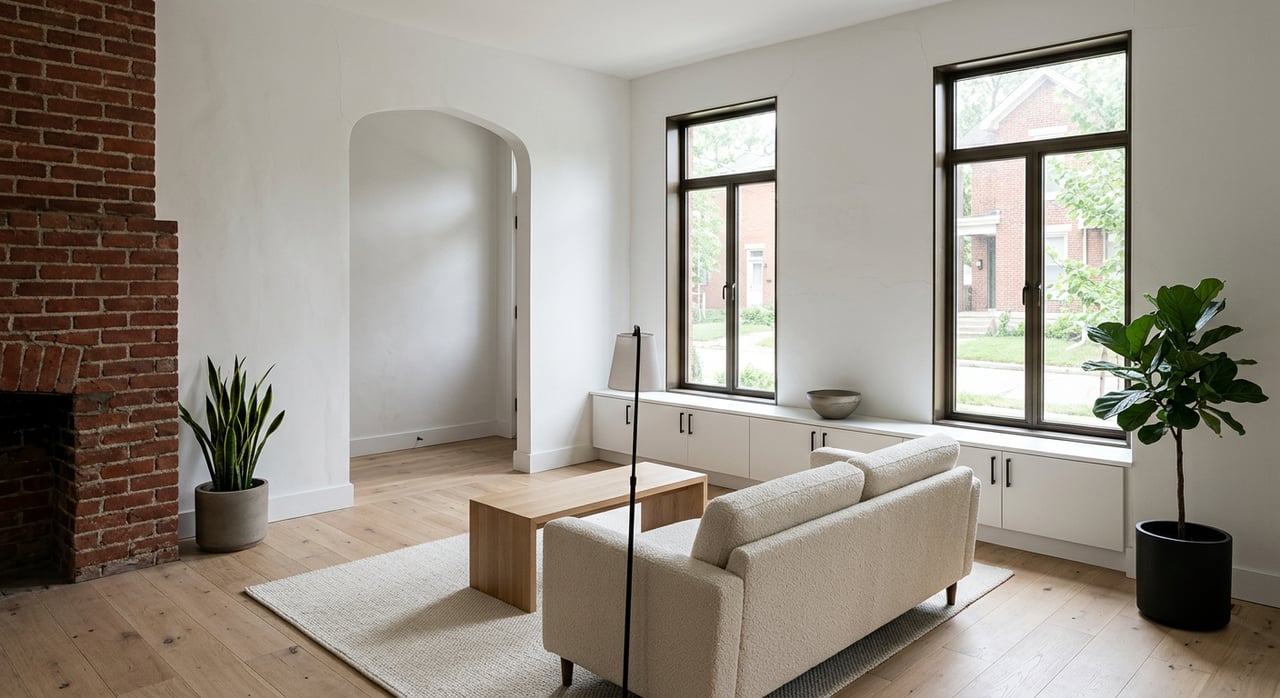
Thinking about buying your first home in South City but not sure where to start? You’re not alone. South City offers a mix of historic charm, varied price points, and a vibrant day-to-day rhythm that appeals to many first-time buyers. In this guide, you’ll get practical price bands by neighborhood, what to expect during inspections for older brick homes, which financing and assistance options to explore, and smart offer strategies. Let’s dive in.
Why South City works for first-time buyers
South City covers a cluster of St. Louis neighborhoods south of the central corridor, anchored by Tower Grove Park and stretching toward the river. You’ll see walkable streets, historic architecture, and pockets of restaurants and coffee spots. Budget-wise, you’ll find everything from simple starter homes to renovated showpieces.
The key is matching your priorities to the right micro-neighborhood and home condition. Start with a few target areas, then get out and tour. Prices vary a lot block by block and by renovation level, so use the ranges below as a guide rather than a rule.
Neighborhood snapshots and budgets
Tower Grove South/East
- Price anchor: Redfin showed a Tower Grove South median sale price around the mid-200Ks, including about $251.5K in Jan 2026 (median sale price, Redfin, Jan 2026).
- A practical first-time buyer range is about $150K–$350K, depending on size, finish level, and proximity to the park.
- Housing stock mixes late-19th and early-20th-century brick with some renovated two-bed options and larger historic homes nearer the park.
The Hill
- Price anchor: Neighborhood trackers in 2025 reported a low-to-mid 200Ks to low 300Ks median, with smaller two-bedroom brick homes often in the $200K–$350K band (Rocket Homes market snapshot).
- Expect a compact neighborhood feel with brick bungalows and tidy streets. Renovated homes or larger footprints can push higher.
Benton Park and Benton Park West
- Price anchor: Redfin data shows Benton Park’s median fluctuating roughly from the low $300Ks up to around $429K, depending on the month and mix of listings (Redfin market page). Smaller samples and varying renovation levels drive the swing.
- For first-time buyers, you might see $150K for a true fixer up to $400K+ for updated historic homes, especially closer to Soulard.
Soulard
- Price anchor: One of the pricier South City cores. Realtor.com reported a median in the upper 300Ks to 400K range in late 2025 (Realtor.com neighborhood overview).
- Expect classic brick rowhouses and townhomes with polished renovations that often sit above the citywide median.
Value plays: Dutchtown and Carondelet
- If you want a lower price point, look at areas like Dutchtown and Carondelet. You’ll find more modest starter options and some properties that need updating.
- As always, evaluate by condition and block. A clean, lightly updated home can offer good value if you are flexible on location.
What homes look like and what to inspect
Most South City homes were built in the late 1800s to early 1900s, with rich masonry details, tall ceilings, and front porches. You’ll also see two-flats, converted walk-ups, and some post-war single-family homes farther south. Renovation levels vary widely. On one street you might tour a turnkey update, while the next block has a solid but dated home or a full rehab project.
Inspection must-knows for older brick homes
- Masonry and tuckpointing: Brick needs maintenance over time. Spot tuckpointing is common; larger façade repointing or structural work can get expensive. Local cost guides note that small repairs can run a few hundred to a few thousand dollars depending on scope, and many contractors quote per-square-foot pricing (HomeAdvisor brick repair overview). Always get a mason’s estimate if your inspector flags concerns.
- Foundations and water: Basements and shallow foundations are typical. Drainage, gutter performance, and sump pumps often appear in inspection reports. Budget for grading fixes or moisture mitigation if needed.
- Plumbing and wiring: Expect older materials in some homes, including galvanized supply lines or cast-iron drains, and occasionally older wiring types. If an inspector notes concerns, get a licensed plumber or electrician to quote repairs. This can affect safety, insurance, and future costs.
- Lead paint and radon: Many pre-1978 homes may contain lead-based paint. Ask about disclosures and testing. Missouri public health guidance strongly recommends radon testing; a significant share of homes test above the EPA action level, and typical mitigation systems often run in the low-thousands depending on layout (Missouri DHSS radon guidance).
Specialty tests to order
- Radon test (48–72 hours)
- Sewer lateral camera scope
- Wood-destroying organism/termite inspection
- Lead paint testing if children will reside or you plan renovations
- Licensed electrician follow-up if older wiring is suspected
Typical diagnostic and repair budgets
- Home inspection: about $300–$500 in St. Louis, based on house size and scope (Manta inspection cost guide).
- Radon mitigation: commonly about $1,000–$2,000 for many setups, per state guidance (Missouri DHSS).
- Tuckpointing or repointing: spot repairs are modest; larger façade projects can run into the thousands. Get at least one local bid (HomeAdvisor).
Tip: Use inspection photos, contractor bids, and objective findings to guide negotiations. Avoid anchoring on a single estimate before you have at least one local quote.
Financing and assistance for first-time buyers
Most first-time buyers in St. Louis use FHA (3.5% down), conventional loans with as little as 3% down, or VA/USDA when eligible. Your credit profile will influence options and pricing. A documented pre-approval, not just a quick pre-qualification, is essential when you are ready to write offers.
MHDC First Place and Next Step
Missouri’s flagship programs offer competitive fixed rates and optional cash assistance for down payment and closing costs. The assistance is often structured as a forgivable second mortgage over time. Income and purchase price limits apply, and you must use a participating lender. See details and lender lists on the MHDC site (MHDC homebuyer programs).
Local education and down payment help
Nonprofits in the St. Louis area provide homebuyer education and may offer down payment or closing cost assistance. Many programs require a HUD-approved class and specific documents at closing. Review local procedures to understand timelines and requirements (Beyond Housing program info).
What to budget beyond the down payment
- Closing costs: often about 2%–5% of the purchase price, depending on loan type and local fees. Some assistance programs can help cover part of this.
- Earnest money: a common local practice is 1%–3% of the purchase price as a good-faith deposit. Know the refund rules based on your contingencies (Zillow earnest money guide).
- Reserves: plan a cushion for first-year maintenance, especially with older homes.
Make a competitive but smart offer
Competition varies by street and season, but well-priced, turnkey homes near parks and key corridors can see multiple offers. A clean, well-structured offer helps you stand out without taking on outsized risk.
Offer checklist
- Pre-approval and funds: Include your lender’s documented pre-approval and proof of funds for your down payment and closing costs.
- Earnest money: 1%–3% is typical. Higher deposits can show strength, but understand your risk if you limit contingencies (Zillow on earnest money).
- Inspection strategy: Most first-time buyers should keep an inspection contingency. Alternatives to a full waiver include a short inspection window or doing an informational-only inspection while staying open to negotiation. Avoid skipping critical health and safety checks.
- Escalation clause: Consider using one in multiple-offer scenarios to increase your bid in small increments up to a cap. Make verification requirements clear.
- Appraisal gap language: If you have extra cash and strong comparable sales, you might cover a defined amount above a low appraisal. Get lender input and proof of funds ready.
Always weigh tradeoffs. Stronger offers can win the house, but reducing protections increases the chance of unexpected costs or losing earnest money. Talk with your agent and lender before you get aggressive.
Step-by-step next steps
- Clarify priorities: Rank what matters most to you, such as walkability, commute, or park access. Shortlist two or three micro-neighborhoods that fit your goals.
- Get two pre-approvals: Compare rates and fees. Ask one MHDC-approved lender if you qualify for First Place or Next Step (MHDC programs).
- Tour open houses: Visit 1–2 weekend opens in each target area to see finishes and layouts in person.
- Prepare for inspections: When you find a contender, plan a standard inspection plus radon test, sewer scope, and termite check. Set aside a small budget for quick contractor bids (Manta inspection cost guide).
- Draft a simple budget for a $275K home:
- Down payment (3%–5%): $8,250–$13,750
- Closing costs (2%–4%): $5,500–$11,000
- Earnest money (1%–3%): $2,750–$8,250
- Inspection and tests: $300–$800
- First-year maintenance set-aside: 1.5%–3% of price
- If using assistance: Enroll early in a HUD-approved class and gather documents like ID, tax returns, and employment verification. Many programs need certificates before closing (Beyond Housing info).
Buying your first South City home is very achievable with clear targets, realistic budgets, and a smart plan for inspections and offers. If you want a step-by-step path tailored to your timeline and budget, we’re here to help you compare neighborhoods, line up trusted inspectors and lenders, and write winning, well-protected offers. Start a conversation with the Svoboda/Shell Group.
FAQs
What are realistic South City starter prices today?
- Many first-time buyers start around the mid-200Ks in Tower Grove South/East, with The Hill often in the low-to-mid 200Ks to low 300Ks. Benton Park and Soulard tend to trend higher, depending on renovation level and location.
Which South City neighborhoods fit a tighter budget?
- Consider Dutchtown and Carondelet for lower price points. Evaluate each home’s condition and recent updates to understand short-term costs.
What inspections are most important for older brick homes?
- In addition to a general inspection, prioritize a radon test, sewer lateral scope, termite inspection, and follow-ups for any flagged masonry, plumbing, or electrical issues.
How much should I budget for closing costs and earnest money?
- A common starting point is 2%–5% of the purchase price for closing costs and 1%–3% for earnest money. Ask your lender if down payment assistance can help with costs.
Are there Missouri programs that help first-time buyers?
- Yes. MHDC’s First Place and Next Step programs offer competitive rates and optional assistance, subject to income and price limits, through participating lenders.